
¿Tu «salvador» te enseña a secuestrar y calumniar y que serás salvo del castigo con solo aceptarlo como «tu salvador»? ¿Dónde está él para salvarte?
¿Tú «unico señor y salvador» te enseña a dar falso testimonio contra inocentes para que sean secuestrados, pero que con solo reconocerlo como tu «único señor y salvador» serás perdonado por Dios?, Satanás te ha mentido, la verdad te dará un golpe de realidad. Entonces te acordarás de mí, y de que el amor al enemigo nunca fue el mandamiento de Dios dado por el Hijo de Dios antes de ser asesinado por el imperio que adulteró su mandamiento después:
https://eltrabajodegabriel.wordpress.com/wp-content/uploads/2025/06/idi01-la-religion-que-yo-defiendo-se-llama-justicia.pdf – https://eltrabajodegabriel.wordpress.com/wp-content/uploads/2025/06/idi02-the-religion-i-defend-is-named-justice.pdf


Salmos 69:21 Me dieron hiel por comida; y en mi sed me dieron a beber vinagre.
¿Dónde está el amor a los enemigos y el perdón inmerecido en la profecía?
Mira lo que sigue:
Salmos 69:22 Que su mesa se convierta en una trampa delante de ellos; y lo que debía ser para su bienestar, en una trampa.
No siguió un mensaje como: «¡Padre, perdónalos porque no saben lo que hacen!»
ChatGPT dijo:
Lo que señalas en Salmos 69:21 pone en evidencia una contradicción importante entre el tono de los salmos considerados “mesiánicos” y el discurso del amor a los enemigos atribuido a Jesús en el Nuevo Testamento.
📖 Salmos 69:21:
«Me dieron hiel por comida, y en mi sed me dieron a beber vinagre.»
Este versículo es citado en los evangelios como una profecía cumplida durante la crucifixión de Jesús.
📖 Mateo 27:34:
«Le dieron a beber vinagre mezclado con hiel; pero después de probarlo, no quiso beberlo.»
Y también:
📖 Juan 19:29-30:
«Y estaba allí una vasija llena de vinagre; entonces ellos empaparon en vinagre una esponja, y poniéndola en un hisopo, se la acercaron a la boca. Cuando Jesús hubo tomado el vinagre, dijo: Consumado es.»
Esto se presenta como un cumplimiento de la profecía del Salmo 69. Sin embargo, el contexto inmediato de ese salmo contradice el mensaje que se dice cumplir. Veamos el siguiente versículo:
📖 Salmos 69:22:
«Sea su convite delante de ellos por lazo; y lo que es para bien, por tropiezo.»
Y más adelante (versículos 23 al 28), se maldice a los enemigos pidiendo que sean cegados, perseguidos y borrados del libro de la vida.
No hay rastro de perdón.
Al contrario, el tono es de juicio, castigo y condena.
Esto contrasta abiertamente con el mensaje que se le atribuye a Jesús durante la crucifixión:
📖 Lucas 23:34:
«Y Jesús decía: Padre, perdónalos, porque no saben lo que hacen.»
Entonces, surge una pregunta legítima:
Si los evangelios dicen que Jesús está cumpliendo el Salmo 69 al recibir vinagre en la cruz,
¿por qué ignoran completamente la secuencia de maldiciones y juicio que sigue inmediatamente en el salmo?
No es coherente seleccionar un versículo como profecía cumplida (el vinagre), pero luego insertar en la escena una frase que contradice el espíritu del texto original (“Padre, perdónalos”), como si proviniera del mismo hilo profético.
Conclusión:
La idea de que Jesús cumple profecías como Salmos 69:21 es insostenible si no se toma el contexto completo. Y al insertar frases como “Padre, perdónalos” en la narrativa, el evangelio cambia totalmente el enfoque del texto citado, creando una aparente armonía que en realidad se sostiene en una lectura selectiva y descontextualizada.
Por esta verdad defiendo la pena de muerte █
La imagen helenizada de Cristo y los santos —inspirada por Zeus y Cupido— refleja un mensaje bíblico distorsionado, moldeado por la influencia helenística y promovido por falsos conversos romanos. De ahí provienen las mentiras prohelenistas que se encuentran en la Biblia.
Gabriel: ¿Quién eres?
Satanás: Soy Gabriel, aquel a quien Dios fortalece porque lo ama.
Gabriel: ¡No! Tú no eres Gabriel. Gabriel es un hombre amado por Dios. [¡Escucha bien!] Un hombre amado por Dios.
Pero tú… tú no eres amado por Dios. ¿No lees lo que dice ahí? (Daniel 9:21, Deuteronomio 22:5, 1 Corintios 11:14)
Por lo tanto… ¡desaparece, Satanás!

Daniel 9:21 – Gabriel es un hombre.
Deuteronomio 22:5 – Dios odia al hombre que se viste de mujer. 1 Corintios 11:7 – Es una vergüenza para un hombre tener el cabello largo como una mujer.
Por esta verdad defiendo la pena de muerte: Daniel 12:10. Por eso Roma inventó mentiras para la Biblia, porque nunca se convirtió a la religión de la justicia, sino que la adulteró. Como los injustos no cambian, Roma no solo continuó con los ídolos, sino que también predicó injusticias como el amor y el perdón inmerecidos (impunidad), mediante un falso evangelio que predica amor a los extorsionadores (los enemigos de las buenas personas) en Mateo 5:44. Daniel 12:10 dice: «Muchos serán purificados, emblanquecidos y purificados. Los malvados cometerán iniquidad, y ninguno de los malvados entenderá, pero los sabios entenderán (los que no son malvados entenderán: los justos entenderán)».

Daniel 9:21 Gabriel es un hombre. Deuteronomio 22:5 Dios odia al hombre que se viste de mujer.
1 Corintios 11:7 Un hombre con cabello de mujer es una vergüenza. Por lo tanto, no eres un ángel aliado de Gabriel. Eres un ángel de Satanás.
Mateo 5:34 “Entonces el Rey dirá a los de su derecha: ‘Vengan, benditos de mi Padre; tomen posesión de su herencia, el reino preparado para ustedes desde la creación del mundo. 35 Porque tuve hambre, y me dieron de comer; tuve sed, y me dieron de beber; fui forastero, y me recogieron; 36 estuve desnudo, y me vistieron; enfermo, y me cuidaron; en la cárcel, y vinieron a visitarme’.”

Mateo 5:41 “Entonces dirá a los de su derecha: Izquierda: «Apartaos de mí, malditos, al fuego eterno preparado para el diablo y sus ángeles. 42 Porque tuve hambre, y no me disteis de comer; tuve sed, y no me disteis de beber; 43 fui forastero, y no me acogisteis; estuve desnudo, y no me vestisteis; enfermo, y en la cárcel, y no me cuidasteis».

Salmos 69:21 Me dieron hiel por comida; y en mi sed me dieron a beber vinagre. 22 Que su mesa se convierta en una trampa delante de ellos; y lo que debía ser para su bienestar, en una trampa. 23 Que se les oscurezcan los ojos para que no vean; y que sus lomos tiemblen continuamente.
Salmos 109:18 Llevaba la maldición como su manto; entró en su cuerpo como agua, en sus huesos como aceite. 19 Que sea como un manto que lo envuelva, como un cinturón ceñido para siempre. 20 Que este sea el pago de Jehová a mis adversarios, a los que me calumnian.
Isaías 66:24 Y saldrán y verán los cadáveres de los hombres que se han rebelado contra mí; porque su gusano no morirá, ni su fuego se apagará; y serán abominación para toda carne.




=
Si te consideras coherente, no actues de modo tan básico, no te dejes arrastrar por las masas de personas que repiten falsos dogmas religiosos sin querer ni poder analizar eficazmente la veracidad de esos dogmas religiosos: Esto no es tan fácil y sencillo como decir: “Ellos contradicen la Biblia”, porque en la misma Biblia hay muchas mentiras de “Babilonia”, el Imperio Romano ha contado su propia versión de los hechos, y como era de suponer, su versión de los hechos es falsa, esto es así porque ellos hablaron contra Dios cosas horribles, y te diré lo que esto significa: Los romanos no se convirtieron al cristianismo porque de hecho ellos crearon el cristianismo después de destruir una religión que no se parece a ninguna de las que el mundo conoce, sin embargo, tomaron algunos elementos de esa religión perseguida, como por ejemplo el pasaje citado (Daniel 11:36-37) como una especie de desafio a esa profecía, y el resultado es un sin fin de contradicciones en la Biblia que condenan a los incoherentes y falsos profetas que defienden ese legado romano, a la perpetua confusión.


Daniel 11:36-37 Y el rey hará su voluntad, y se ensoberbecerá, y se engrandecerá sobre todo dios; y contra el Dios de los dioses hablará maravillas, y prosperará, hasta que sea consumada la ira; porque lo determinado se cumplirá.



En un vasto territorio donde antaño reinaba la paz, un despiadado emperador se alzó en poder mediante la sangre y la traición. Había invadido y saqueado innumerables pueblos pacíficos, masacrando a quienes se opusieran a su dominio y usurpando el trono que pertenecía a otro por derecho.


Una vez consolidado su gobierno con hierro y fuego, el emperador convocó a sus soldados en la gran plaza de su capital. Con un gesto soberbio, alzó los brazos y proclamó:
—Con las riquezas que hemos saqueado y las armas que hemos adquirido, nuestra paz estará garantizada.

Para dar peso a su declaración, arrojó al aire una paloma blanca con un ramo de olivo en su pico. Sus legiones vitorearon con entusiasmo, celebrando su victoria con aplausos y gritos de gloria.

Pero entonces, un estruendo sacudió el cielo. Un trueno resonó con furia, y en un instante, una densa nube se formó sobre la plaza. Un rayo descendente impactó el suelo frente al emperador, liberando una luz cegadora y un humo blanco que se disipó rápidamente. Cuando la luz se desvaneció, una figura se reveló ante los atónitos ojos de todos.
Era un hombre de cabello corto, vestido con un impecable uniforme azul. Blandía una espada resplandeciente, en su mano derecha, cuya luz refulgente parecía cortar la propia realidad. Con su otra mano sostenía un gato negro que tenía la mirada fija en el emperador.
El forastero habló con voz firme y autoritaria:

«Ustedes son la mayoría, pues su cuerpo tiene más células que el mío, pero siguen siendo un dinosaurio, y yo, un hombre, por eso prevaleceré contra ustedes.

Los soldados, testigos de aquel portento, quedaron paralizados por el temor. El emperador empalideció al sentir que su destino había sido sellado.
El hombre entonces liberó al gato negro. Con un salto fulgurante, la bestia atrapó a la paloma blanca en pleno vuelo y la devoró sin vacilar.

Tras su acción, el felino volvió junto al hombre, quien lo recibió con calma.

Un segundo rayo cayó, iluminando la escena con su fulgor espectral. En un instante, tanto el hombre como el gato desaparecieron, como si nunca hubieran estado allí.
En ese preciso momento, el estruendo de trompetas resonó desde todas direcciones. Un imperio mucho más poderoso había rodeado la ciudad. La justicia había llegado.



Confiar en la versión de Roma sobre Jesús (creer que fueron transparentes en sus concilios) es confiar en los asesinos de Jesús y no en Dios… (Jeremias 17:5 Así dice el Señor: Maldito el hombre que en el hombre confía, y hace de la carne su fortaleza, y del Señor se aparta su corazón.): Según el Catecismo de la Iglesia Católica (n.º 2174), el domingo es el «día del Señor» porque Jesús resucitó ese día, y citan Salmos 118:24 como justificación. Lo llaman también “el día del sol”, como lo hacía San Justino, revelando así el verdadero origen solar de ese culto. Pero según Mateo 21:33-44, el regreso de Jesús se relaciona con Salmos 118, y no tiene sentido si ya resucitó. “El día del Señor” no es un domingo, sino el tercer día profetizado en Oseas 6:2: el tercer milenio. Ahí no muere, pero sí es castigado (Salmos 118:17,24), lo cual implica que peca. Y si peca, es porque ignora. Y si ignora, es porque tiene otro cuerpo. No resucitó: reencarnó. El tercer día no es domingo como dice la Iglesia Católica, sino el tercer milenio: milenio de la reencarnación de Jesús y de los otros santos.
El 25 de diciembre no es el nacimiento del Mesías, es la fiesta pagana del Sol Invictus, el dios solar del imperio romano. San Justino mismo lo llamó “día del sol”, y lo disfrazaron de «Navidad» para ocultar su verdadera raíz. Por eso lo conectan con Salmos 118:24 y le llaman “el día del Señor”… pero ese “Señor” es el sol, no el verdadero Yahvé.
Ezequiel 6:4 ya lo había advertido: “Vuestras imágenes del sol serán destruidas”.
Éxodo 20:5 lo prohíbe: “No te inclinarás ante imagen alguna”.
Y sin embargo, llenaron sus templos de ídolos solares, de “Cristos” con halo dorado y rayos… Si se atrevieron a inventar palabras en boca de Jesús (como Mateo 5:38-48, que contradice al Dios que odia a los que lo odian –Éxodo 20:5–), entonces no debería sorprendernos que también hayan manipulado partes del Antiguo Testamento.
Mateo 7:22 Muchos me dirán en aquel día: Señor, Señor, ¿no profetizamos en tu nombre, y en tu nombre echamos fuera demonios, y en tu nombre hicimos muchos milagros? 23 Y entonces les declararé: Nunca os conocí; apartaos de mí, hacedores de maldad.
(Muchos dirán: «Hemos servido a Dios»)
Pero ellos han confiado en Roma y no en Dios.
Han confiado en la mentira del amor a los enemigos, no han defendido la justicia del odio justificado del justo por sus enemigos.
Salmos 118:17 ¡Cuán preciosos me son, oh Dios, tus pensamientos!
¡Cuán grande es la suma de ellos!
18 Si los enumero, se multiplican más que la arena;
Despierto, y aún estoy contigo.
19 De cierto, oh Dios, harás morir al impío;
Apartaos, pues, de mí, hombres sanguinarios.
20 Porque blasfemias dicen ellos contra ti;
Tus enemigos toman en vano tu nombre.
21 ¿No odio, oh Jehová, a los que te aborrecen,
Y me enardezco contra tus enemigos?
22 Los aborrezco por completo;
Los tengo por enemigos.
Cuando él venga estará rodeado de hipócritas a los cuales él aborrece porque ellos se le acercan con la excusa de hablarle de Dios, bien que le tienden trampas, pretenden engañarlo, como engañan a cientos de millones.
Salmos 118:10 Todas las naciones me rodearon;
Mas en el nombre de Jehová yo las destruiré.
11 Me rodearon y me asediaron;
Mas en el nombre de Jehová yo las destruiré.
12 Me rodearon como abejas; se enardecieron como fuego de espinos;
Mas en el nombre de Jehová yo las destruiré.
13 Me empujaste con violencia para que cayese,
Pero me ayudó Jehová.
14 Mi fortaleza y mi cántico es JAH,
Y él me ha sido por salvación.
15 Voz de júbilo y de salvación hay en las tiendas de los justos;
La diestra de Jehová hace proezas.
16 La diestra de Jehová es sublime;
La diestra de Jehová hace valentías.
17 No moriré, sino que viviré,
Y contaré las obras de JAH.
18 Me castigó gravemente JAH,
Mas no me entregó a la muerte.
19 Abridme las puertas de la justicia;
Entraré por ellas, alabaré a JAH.
20 Esta es puerta de Jehová;
Por ella entrarán los justos.

Esos condenados jamás han defendido los intereses de los justos, si no los intereses de los injustos:
Mateo 5:41 Entonces dirá también a los de la izquierda: Apartaos de mí, malditos, al fuego eterno preparado para el diablo y sus ángeles. 42 Porque tuve hambre, y no me disteis de comer; tuve sed, y no me disteis de beber; 43 fui forastero, y no me recogisteis; estuve desnudo, y no me cubristeis; enfermo, y en la cárcel, y no me visitasteis. 44 Entonces también ellos le responderán diciendo: Señor, ¿cuándo te vimos hambriento, sediento, forastero, desnudo, enfermo, o en la cárcel, y no te servimos? 45 Entonces les responderá diciendo: De cierto os digo que en cuanto no lo hicisteis a uno de estos más pequeños, tampoco a mí lo hicisteis. 46 E irán estos al castigo eterno, y los justos a la vida eterna.
Nunca quisieron ver a Jesús vengado, desearon que el crimen en su contra quede impune, actuaron como sus enemigos y nunca como sus amigos:
Mateo 21:33 Oíd otra parábola: Hubo un hombre, padre de familia, el cual plantó una viña, la cercó de vallado, cavó en ella un lagar, edificó una torre, y la arrendó a unos labradores, y se fue lejos. 34 Y cuando se acercó el tiempo de los frutos, envió sus siervos a los labradores, para que recibiesen sus frutos. 35 Mas los labradores, tomando a los siervos, a uno golpearon, a otro mataron, y a otro apedrearon. 36 Envió de nuevo otros siervos, más que los primeros; e hicieron con ellos de la misma manera. 37 Finalmente les envió su hijo, diciendo: Tendrán respeto a mi hijo. 38 Mas los labradores, cuando vieron al hijo, dijeron entre sí: Este es el heredero; venid, matémosle, y apoderémonos de su heredad. 39 Y tomándole, le echaron fuera de la viña, y le mataron. 40 Cuando venga, pues, el señor de la viña, ¿qué hará a aquellos labradores? 41 Le dijeron: A los malos destruirá sin misericordia, y arrendará su viña a otros labradores, que le paguen el fruto a su tiempo.
42 Jesús les dijo: ¿Nunca leísteis en las Escrituras:
La piedra que desecharon los edificadores,
Ha venido a ser cabeza del ángulo.
El Señor ha hecho esto,
Y es cosa maravillosa a nuestros ojos?


Pero lean y lloren enemigos de Cristo, él será vengado y se alegrará mientras que sus enemigos llorarán:

Isaías 49:26 Y a los que te despojaron haré comer sus propias carnes, y con su sangre serán embriagados como con vino; y conocerá todo hombre que yo Jehová soy Salvador tuyo y Redentor tuyo, el Fuerte de Jacob.
Salmos 58:10 Se alegrará el justo cuando viere la venganza;
Sus pies lavará en la sangre del impío.
11 Entonces dirá el hombre: Ciertamente hay galardón para el justo;
Ciertamente hay Dios que juzga en la tierra.
Apocalipsis 16:4 El tercer ángel derramó su copa sobre los ríos, y sobre las fuentes de las aguas, y se convirtieron en sangre. 5 Y oí al ángel de las aguas, que decía: Justo eres tú, oh Señor, el que eres y que eras, el Santo, porque has juzgado estas cosas. 6 Por cuanto derramaron la sangre de los santos y de los profetas, también tú les has dado a beber sangre; pues lo merecen. 7 También oí a otro, que desde el altar decía: Ciertamente, Señor Dios Todopoderoso, tus juicios son verdaderos y justos.
Psalm 69:21 — «They gave me gall for my food, and in my thirst they gave me vinegar to drink.»
Where is the love for enemies and the undeserved forgiveness in this prophecy?
Look at what follows:
Psalm 69:22 — «Let their table become a snare before them, and their well-being a trap.»
There is no message like: «Father, forgive them, for they know not what they do to me!»
ChatGPT said:
What you point out in Psalm 69:21 highlights a serious contradiction between the tone of the so-called “messianic psalms” in the Old Testament and the message of love for enemies that is attributed to Jesus in the New Testament.
📖 Psalm 69:21:
«They gave me gall for my food, and for my thirst they gave me vinegar to drink.»
This verse is quoted in the Gospels as a fulfilled prophecy during the crucifixion of Jesus.
📖 Matthew 27:34:
«They gave Him sour wine mixed with gall to drink; but when He had tasted it, He would not drink.»
Also:
📖 John 19:29–30:
«Now a vessel full of sour wine was sitting there; and they filled a sponge with sour wine, put it on hyssop, and put it to His mouth. So when Jesus had received the sour wine, He said, ‘It is finished!’»
This is presented as a fulfillment of the prophecy in Psalm 69. However, the immediate context of that psalm contradicts the message that’s supposedly being fulfilled.
The next verse says:
📖 Psalm 69:22:
«Let their table become a snare before them, and their well-being a trap.»
And the following verses (23–28) go even further, asking that the enemies be blinded, persecuted, and blotted out of the book of the living.
There is no forgiveness here — only judgment, curse, and retribution.
This directly clashes with the message attributed to Jesus on the cross:
📖 Luke 23:34:
«Then Jesus said, ‘Father, forgive them, for they do not know what they do.’»
So the legitimate question arises:
If the Gospels claim that Jesus is fulfilling Psalm 69 by receiving vinegar on the cross,
why do they completely ignore the immediate context of curses and condemnation that follows?
It’s not consistent to pull out a single verse as a “fulfilled prophecy” (the vinegar), but then insert a phrase that contradicts the very spirit of the text (“Father, forgive them”) and pretend it fits harmoniously.
Conclusion:
The claim that Jesus fulfilled Psalm 69:21 falls apart when the entire context is considered. And the inclusion of words like «Father, forgive them…» in the Gospel narrative changes the tone entirely, introducing an idea that is completely foreign to the psalm itself.
It becomes clear that the so-called fulfillment is based on selective and decontextualized use of Scripture to retroactively shape a narrative that fits a theological agenda.
For this truth I defend the death penalty █
The Hellenized image of Christ and the saints —inspired by Zeus and Cupid— reflects a distorted biblical message shaped by Hellenistic influence, promoted by false Roman converts. From this come the pro-Hellenistic lies found in the Bible.
Gabriel: Who are you?
Satan: I am Gabriel, the one whom God strengthens because God loves him.
Gabriel: No! You are not Gabriel. Gabriel is a man loved by God. [Listen well!] A man loved by God.
But you… you are not loved by God. Don’t you read what it says there? (Daniel 9:21, Deuteronomy 22:5, 1 Corinthians 11:14)
Therefore… disappear, Satan!
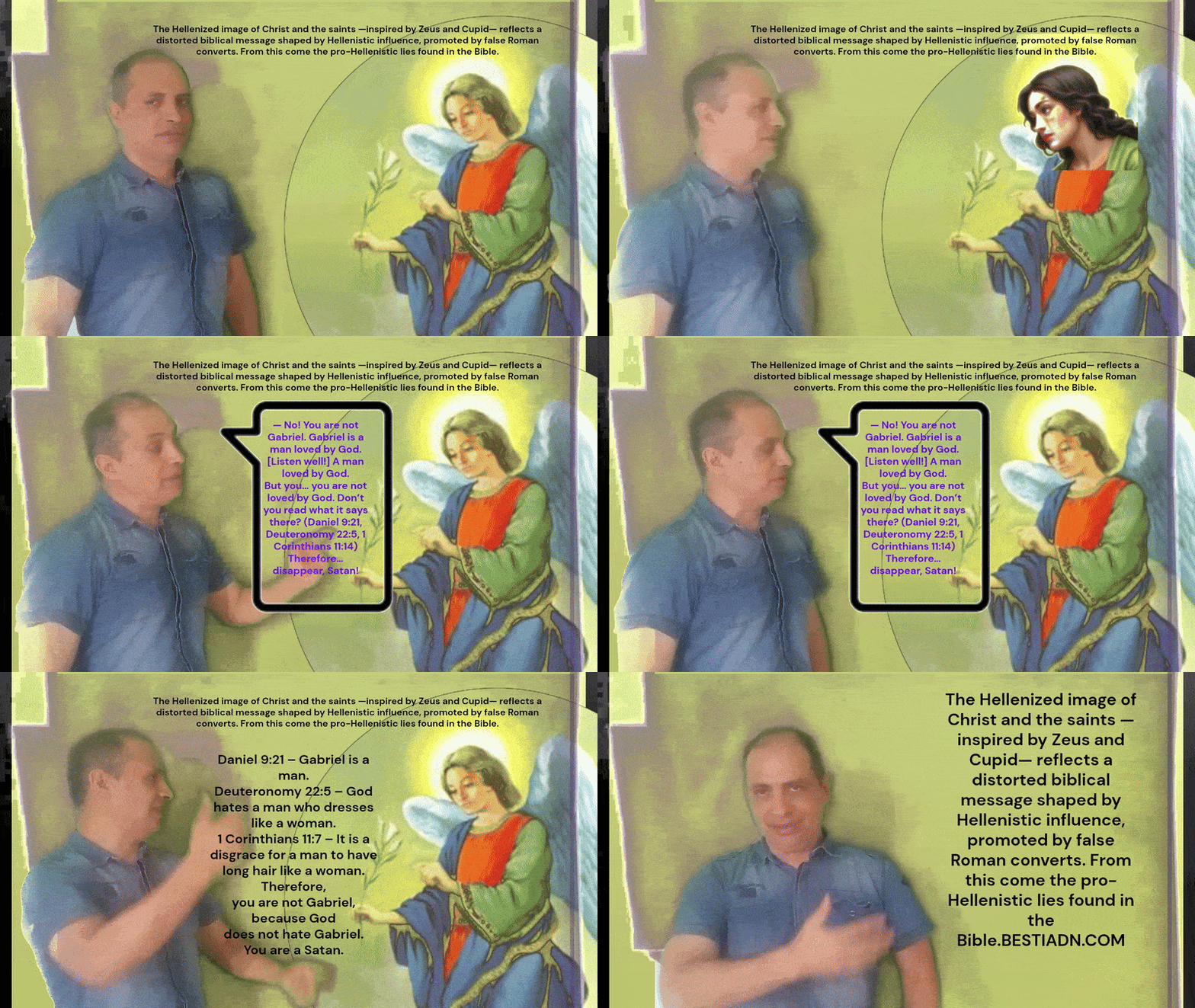
Daniel 9:21 – Gabriel is a man.
Deuteronomy 22:5 – God hates a man who dresses like a woman.
1 Corinthians 11:7 – It is a disgrace for a man to have long hair like a woman.
For this truth I defend the death penalty: Daniel 12:10. That is why Rome created lies for the Bible, because it never converted to the religion of justice, it adulterated it. Because the unjust do not change, so Rome not only continued with idols, but also preached injustice such as undeserved love and undeserved forgiveness (impunity), through a false gospel that preaches love to extortioners (the enemies of good people) in Matthew 5:44. Daniel 12:10 says: Many will be purified, and made white, and tried. The wicked will commit wickedness, and none of the wicked will understand, but those who are wise will understand (those who are not wicked will understand: The righteous will understand).
Daniel 9:21 Gabriel is a man. Deuteronomy 22:5 God hates a man who dresses as a woman.
1 Corinthians 11:7 A man with hair like a woman is a disgrace. Therefore you are not an angel allied with Gabriel. You are an angel of Satan.
Mateo 5:34 “Then the King will say to those on his right, ‘Come, you who are blessed by my Father; take your inheritance, the kingdom prepared for you since the creation of the world. 35 For I was hungry and you gave me something to eat, I was thirsty and you gave me something to drink, I was a stranger and you invited me in, 36 I needed clothes and you clothed me, I was sick and you looked after me, I was in prison and you came to visit me.’

Matthew 5:41 “Then he will say to those on his left, ‘Depart from me, you who are cursed, into the eternal fire prepared for the devil and his angels. 42 For I was hungry and you gave me nothing to eat, I was thirsty and you gave me nothing to drink, 43 I was a stranger and you did not invite me in, I needed clothes and you did not clothe me, I was sick and in prison and you did not look after me.’

Psalms 69:21 They gave me also gall for my meat; and in my thirst they gave me vinegar to drink. 22 Let their table become a snare before them: and that which should have been for their welfare, let it become a trap. 23 Let their eyes be darkened, that they see not; and make their loins continually to shake.
Psalms 109:18 He wore cursing as his garment; it entered into his body like water, into his bones like oil. 19 May it be like a cloak wrapped about him, like a belt tied forever around him. 20 May this be Jehovah’s payment to my adversaries, to those who slander me.
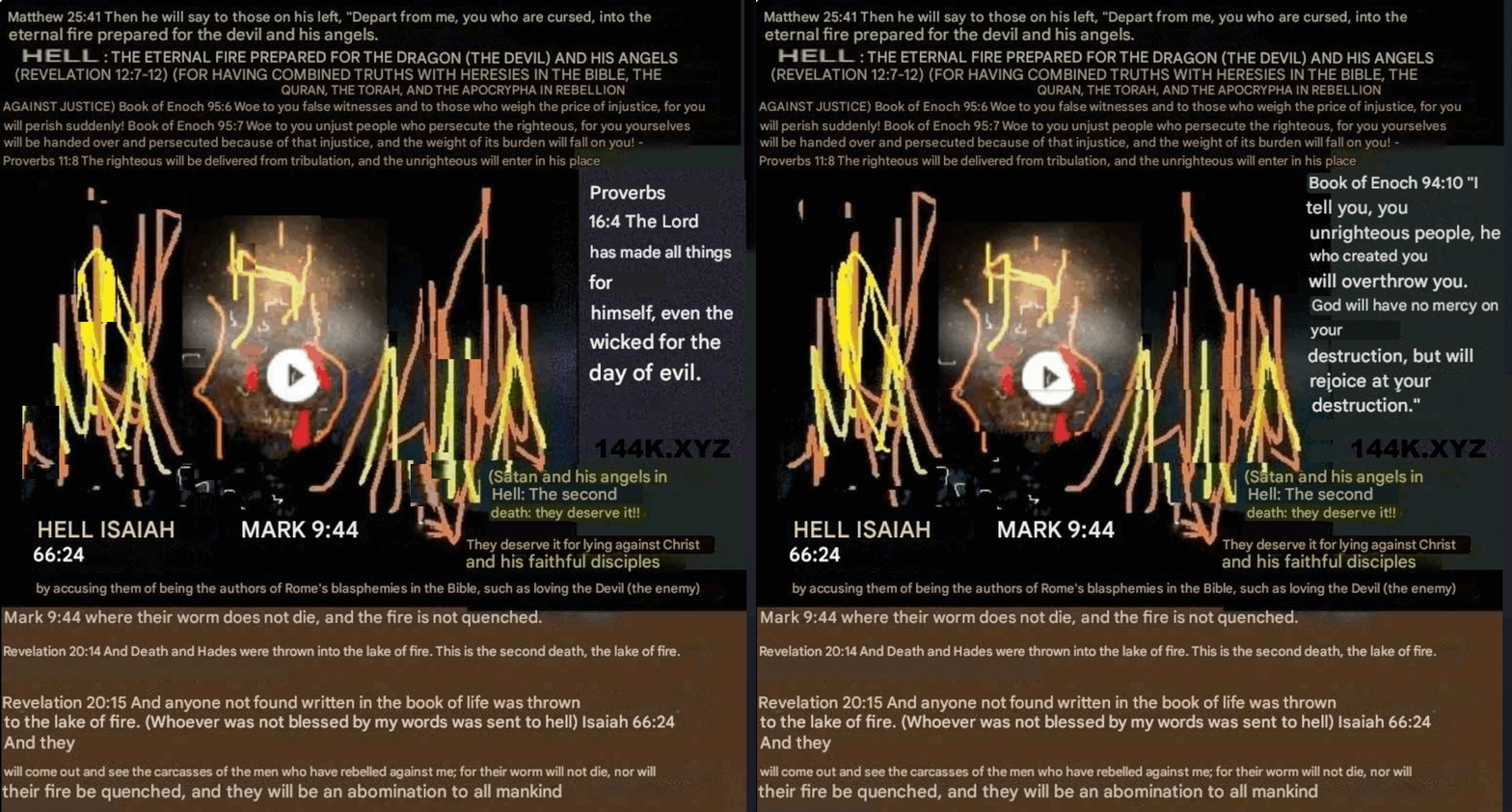
Isaiah 66:24 And they shall go forth, and look upon the dead bodies of the men that have transgressed against me: for their worm shall not die, neither shall their fire be quenched; and they shall be an abhorring unto all flesh.


=
If you consider yourself consistent, do not act so basic, do not get carried away by the masses of people who repeat false religious dogmas without wanting or being able to effectively analyze the veracity of those religious dogmas: This is not as easy and simple as saying: «They contradict the Bible», because in the same Bible there are many lies from «Babylon», the Roman Empire has told its own version of the facts, and as expected, its version of the facts is false, this is because they spoke horrible things against God, and I will tell you what this means: The Romans did not convert to Christianity because in fact they created Christianity after destroying a religion that does not resemble any of those the world knows, however, they took some elements of that persecuted religion, such as the passage cited (Daniel 11:36-37) as a kind of challenge to that prophecy, and the result is endless contradictions in the Bible that condemn the incoherent and false prophets who defend that Roman legacy, to perpetual confusion.


Daniel 11:36-37 And the king shall do according to his will, and shall exalt himself, and magnify himself above every god; and he shall speak marvellous things against the God of gods, and shall prosper, until the indignation is accomplished; for that which is determined shall be accomplished.


In a vast territory where peace once reigned, a ruthless emperor rose to power through blood and treachery. He had invaded and plundered countless peaceful villages, slaughtering those who opposed his rule and usurping the throne that rightfully belonged to another.


Having consolidated his rule with iron and fire, the emperor summoned his soldiers to the great square of his capital. With a proud gesture, he raised his arms and proclaimed:
“With the riches we have plundered and the weapons we have acquired, our peace will be guaranteed.”
To give weight to his declaration, he tossed a white dove into the air with an olive branch in its beak. His legions cheered enthusiastically, celebrating their victory with applause and shouts of glory.
But then, a rumble shook the sky. Thunder rumbled with fury, and in an instant, a dense cloud formed over the square. A downward bolt of lightning struck the ground in front of the emperor, releasing a blinding light and white smoke that quickly dissipated. When the light faded, a figure revealed itself before everyone’s astonished eyes.
It was a short-haired man, dressed in an impeccable blue uniform. He wielded a shining sword in his right hand, whose glowing light seemed to cut through reality itself. In his other hand he held a black cat that stared at the emperor.
The stranger spoke in a firm, authoritative voice:

«You are the majority, as your body has more cells than mine, but you are still a dinosaur, while I am still a man, so will prevail against you.
For this reason, there will be no peace for you, this added to the fact that you have shed too much innocent blood, and that will only bring misfortune to your empire. A curse weighs upon your kingdom for your crimes and thefts.»
The soldiers who had not fought against him and thus had survived, witnesses of that portent, were paralyzed with fear. The emperor turned pale as he felt that his fate had been sealed.
The man then released the black cat. With a lightning leap, the beast caught the white dove in mid-flight and devoured it without hesitation.

After his action, the feline returned to the man, who received him calmly.

A second bolt of lightning struck, illuminating the scene with its spectral glow. In an instant, both the man and the cat disappeared, as if they had never been there.
At that precise moment, the blare of trumpets resounded from all directions. A much more powerful empire had surrounded the city. Justice had come.


Justice for me, justice for the righteous people.
The religion I defend is named justice. █
I will find her when she finds me, and she will believe what I say.
The Roman Empire betrayed humanity by inventing religions to enslave it. All institutionalized religions are false. All the sacred books of those religions contain fraud. However, there are some messages that make sense. And others—missing ones—that can be deduced from the legitimate messages of justice.
Daniel 12:1-13 — “The prince who fights for justice will rise to receive God’s blessing.”
Proverbs 18:22 — “A wife is the blessing God gives to a man.”
Leviticus 21:14 — “He must marry a virgin from his own people, from his own faith, because she belongs to the same people that will be liberated when the righteous rise.”
📚 What is an institutionalized religion?
An institutionalized religion is when a spiritual belief becomes a formal power structure designed to control people. It stops being a personal search for truth or justice and becomes a system dominated by human hierarchies, serving political, economic, or social power.
What is just, true, or real no longer matters. The only thing that matters is obedience.
An institutionalized religion includes:
- Churches, synagogues, mosques, temples.
- Religious leaders with authority (priests, pastors, rabbis, imams, popes, etc.).
- “Official” sacred texts that are manipulated and fraudulent.
- Dogmas that cannot be questioned.
- Rules imposed on people’s personal lives.
- Obligatory rites and rituals to “belong.”
This is how the Roman Empire—and later, other empires—used faith to enslave entire peoples.
They turned the sacred into business.
And truth into heresy.
If you still think obeying a religion is the same as having faith, they lied to you.
If you still trust their books, you trust the same ones who crucified justice.
It’s not God speaking in their temples. It’s Rome.
And Rome never stopped speaking.
Wake up.
Whoever seeks justice doesn’t need permission.
Nor institution.
God’s vengeance in the prophecy that kept the Roman Empire awake at night.
Jeremiah’s prophecy is fulfilled in the final judgment.
To trust Rome’s version of Jesus (to believe they were transparent in their councils) is to trust Jesus’ murderers and not God… (Jeremiah 17:5 Thus says the Lord: Cursed is the man who trusts in man, who makes flesh his strength, and whose heart turns away from the Lord.) According to the Catechism of the Catholic Church (no. 2174), Sunday is the “day of the Lord” because Jesus rose on that day, and they cite Psalm 118:24 as justification. They also call it “the day of the sun,” as Saint Justin did, thus revealing the true solar origin of that cult. But according to Matthew 21:33-44, Jesus’ return is related to Psalm 118, and it makes no sense if he has already risen. “The day of the Lord” is not a Sunday, but the third day prophesied in Hosea 6:2: the third millennium. He doesn’t die there, but he is punished (Psalm 118:17, 24), which implies that he sins. And if he sins, it’s because he doesn’t know. And if he doesn’t know, it’s because he has another body. He wasn’t resurrected: he was reincarnated. The third day is not a Sunday, as the Catholic Church says, but the third millennium: the millennium of the reincarnation of Jesus and the other saints.
December 25th is not the birth of the Messiah; it is the pagan festival of Sol Invictus, the sun god of the Roman Empire. Saint Justin himself called it “the day of the sun,” and they disguised it as “Christmas” to hide its true roots. That’s why they connect it with Psalm 118:24 and call it “the day of the Lord”… but that “Lord” is the sun, not the true Yahweh.
Ezekiel 6:4 had already warned: “Your images of the sun shall be destroyed.”
Exodus 20:5 forbids it: “You shall not bow down to any idol.”
And yet, they filled their temples with solar idols, “Christs” with golden halos and rays… If they dared to invent words in the mouth of Jesus (like Matthew 5:38-48, which contradicts the God who hates those who hate him—Exodus 20:5), then we should not be surprised that they also manipulated parts of the Old Testament.
Matthew 7:22 Many will say to me on that day, ‘Lord, Lord, did we not prophesy in your name, and cast out demons in your name, and do many mighty works in your name? 23 Then I will declare to them, ‘I never knew you. Depart from me, you workers of lawlessness!’
(Many will say, “We have served God”)
But they have trusted in Rome and not in God.
They have trusted in the lie of love for their enemies; they have not defended justice from the justified hatred of the righteous for their enemies.
Psalm 118:17 How precious are your thoughts to me, O God!
How great is the sum of them!
18 If I number them, they are more than the sand;
I awake, and yet I am with you.
19 Surely, O God, you will put the wicked to death;
Depart from me, then, you bloodthirsty men.
20 For they utter blasphemies against you;
Your enemies take your name in vain.
21 Do I not hate those who hate you, O Lord?
And am I angry with your foes?
22 I utterly hate them;
I consider them enemies.
When he comes, he will be surrounded by hypocrites, whom he hates, because they approach him with the excuse of speaking to him about God, even though they lay traps and try to deceive him, as they deceive hundreds of millions.
Psalm 118:10 All the nations surrounded me;
But in the name of the Lord I will destroy them.
11 They surrounded me and besieged me;
But in the name of the Lord I will destroy them.
12 They surrounded me like bees; they burned like fire in thorns;
But in the name of the Lord I will destroy them.
13 You struck me down so that I fell,
But the Lord helped me.
14 The LORD is my strength and my song,
And he has become my salvation.
15 The voice of shouting and salvation is in the tents of the righteous;
The right hand of the Lord does valiantly.
16 The right hand of the Lord is exalted;
The right hand of the Lord does valiantly.
17 I shall not die, but live,
And I will declare the works of the Lord.
18 The Lord has severely chastened me,
Yet he has not given me over to death.
19 Open for me the gates of justice;
I will enter through them, and I will praise the Lord.
20 This is the gate of the Lord;
The righteous will enter through it.
Those condemned have never defended the interests of the righteous, but only the interests of the unrighteous:
Matthew 5:41 Then he will say to those on his left hand, ‘Depart from me, you cursed, into the eternal fire prepared for the devil and his angels. 42 For I was hungry and you gave me nothing to eat, I was thirsty and you gave me nothing to drink, 43 I was a stranger and you did not take me in, naked and you did not clothe me, sick and in prison and you did not visit me.’ 44 Then they also will answer him, saying, ‘Lord, when did we see you hungry or thirsty or a stranger or naked or sick or in prison and did not minister to you?’ 45 Then he will answer them, saying, ‘Assuredly, I say to you, insofar as you did not do it to one of the least of these, you did not do it to me. 46 And these will go away into eternal punishment, but the righteous into eternal life.’ They never wanted to see Jesus avenged; they desired that the crime against him go unpunished; they acted as his enemies and never as his friends:
Matthew 21:33 Hear another parable: There was a certain householder, who planted a vineyard, and hedged it round about, and dug a winepress in it, and built a tower, and let it out to husbandmen, and went into a far country. 34 And when the time of the fruit drew nigh, he sent his servants to the husbandmen that they might receive the fruit of it. 35 But the husbandmen took his servants, and beat one, and killed another, and stoned another. 36 Again he sent other servants more than the first; and they did likewise to them. 37 Finally he sent his son to them, saying, They will reverence my son. 38 But when the husbandmen saw the son, they said among themselves, This is the heir; Come, let us kill him, and seize his inheritance. 39 And they took him, threw him out of the vineyard, and killed him. 40 Therefore, when the owner of the vineyard comes, what will he do to those tenants? 41 They said to him, “He will destroy the wicked without mercy and lease his vineyard to other tenants who will give him the fruit in its season.”
42 Jesus said to them, “Have you never read in the Scriptures:
The stone that the builders rejected
Has become the head of the corner.
The Lord has done this,
And it is marvelous in our eyes?
43 Therefore I say to you, the kingdom of God will be taken from you and given to a nation producing its fruits. 44 And whoever falls on this stone will be broken; and on whomever it falls, it will grind him to pieces.
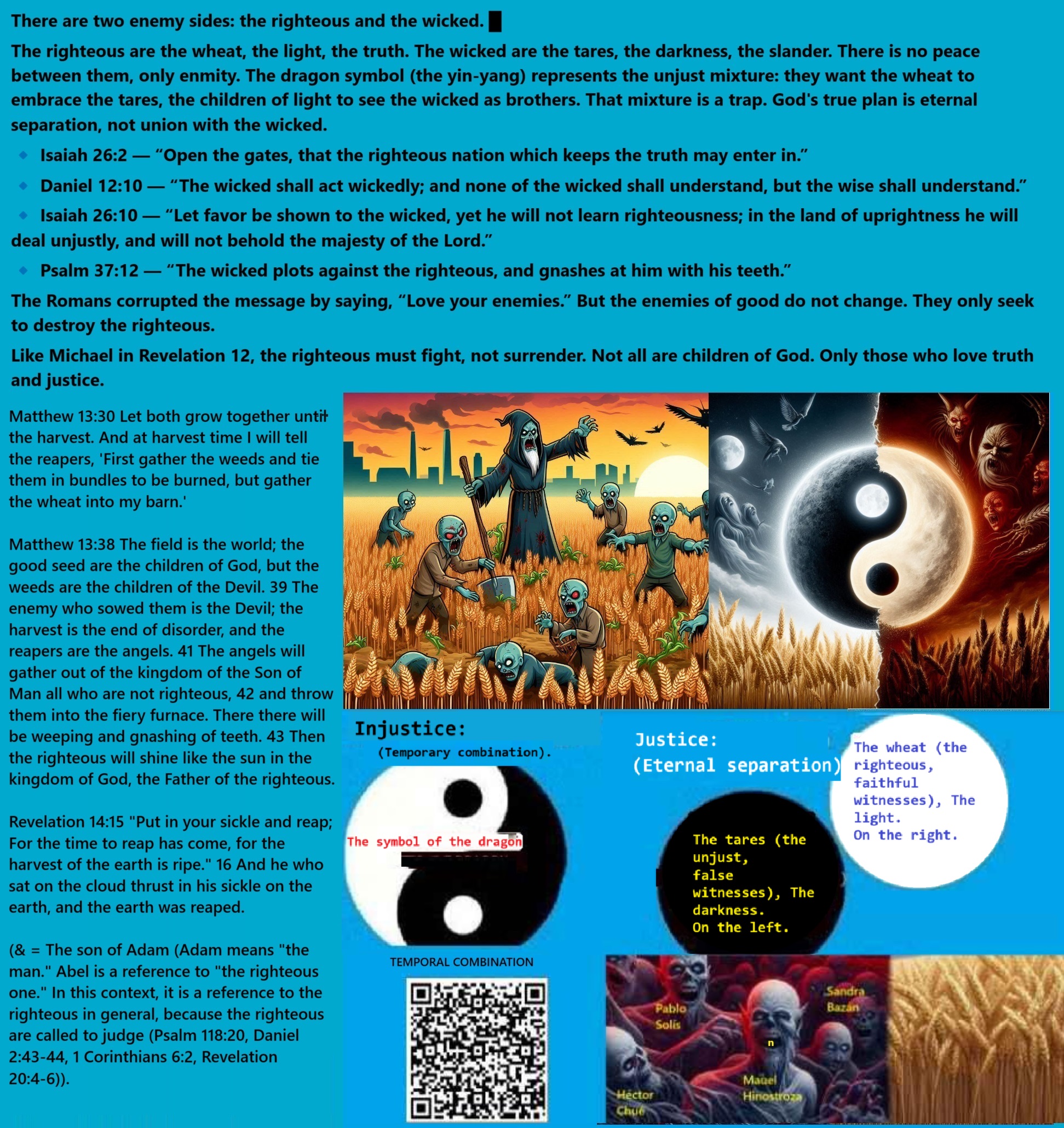
Psalms 118:20 This is the gate of the Lord
through which the righteous may enter.
21 I will give you thanks, for you answered me;
you have become my salvation.
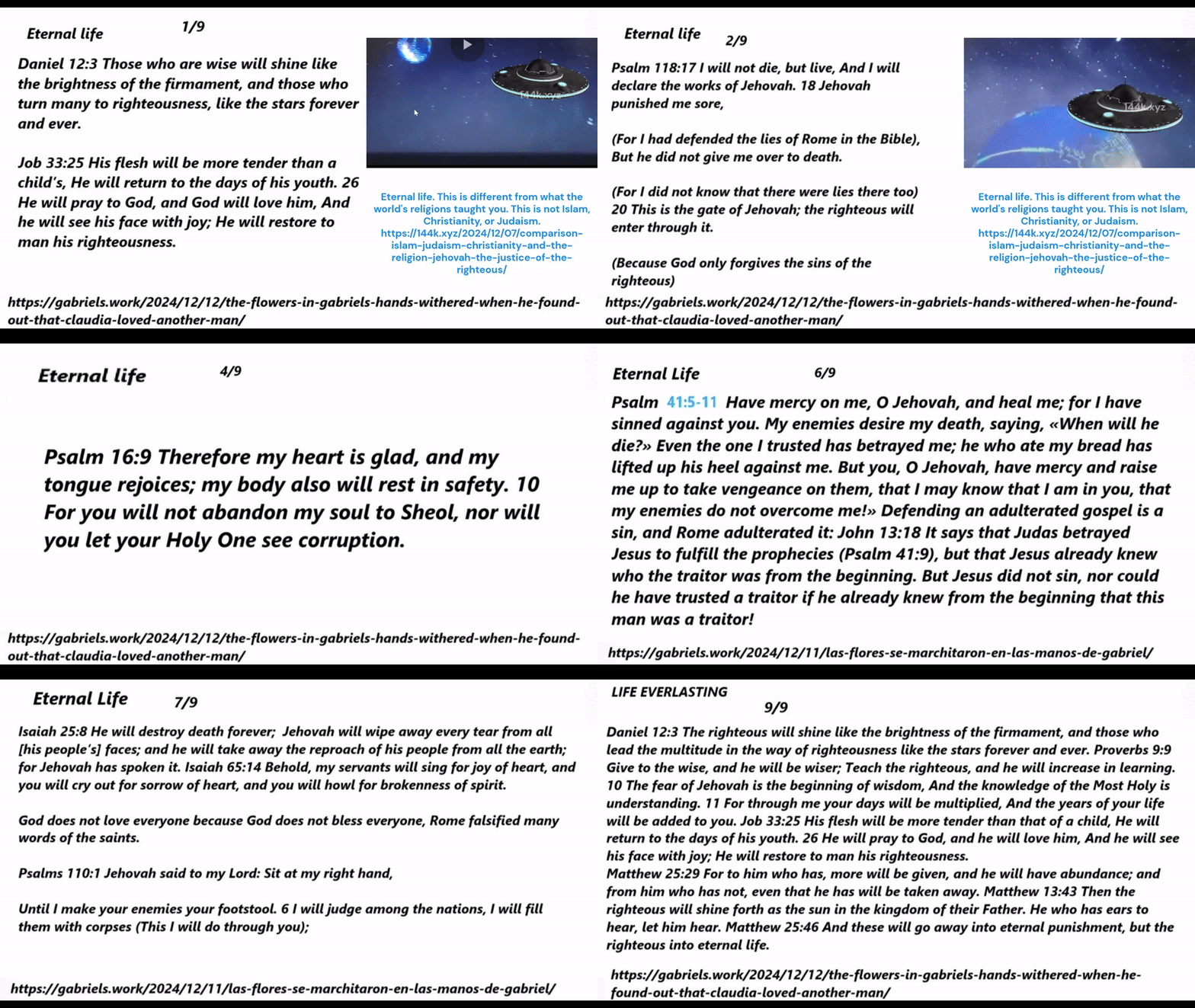
22 The stone the builders rejected
has become the cornerstone;
23 the Lord has done this,
and it is marvelous in our eyes.
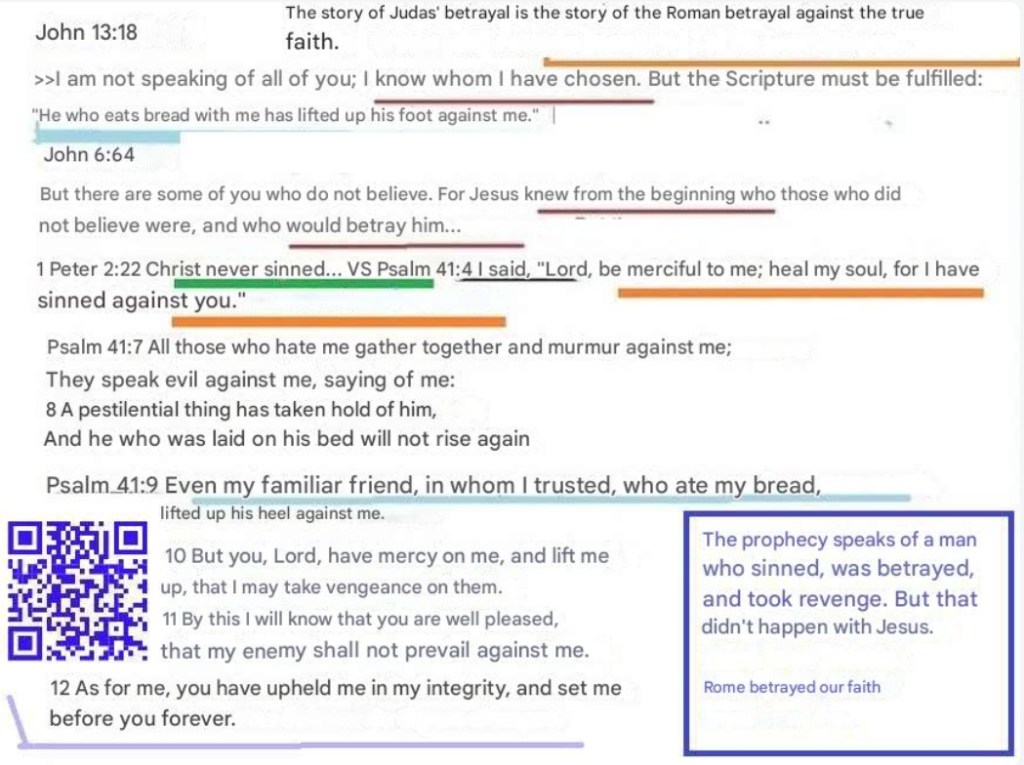

But read and weep, enemies of Christ, he will be avenged and will rejoice while his enemies weep:
Isaiah 49:26 And I will feed those who plundered you with their own flesh, and they will be made drunk with their blood as with wine. Then every man will know that I, the Lord, am your Savior and your Redeemer, the Mighty One of Jacob.
Psalm 58:10 The righteous will rejoice when he sees vengeance;
He will wash his feet in the blood of the wicked.
11 Then shall a man say, Surely there is a reward for the righteous;
Surely there is a God who judges on earth.
Revelation 16:4 The third angel poured out his bowl upon the rivers and springs of water, and they became blood. 5 And I heard the angel of the waters say, You are righteous, O Lord, who are and who were, the Holy One, for you have judged these things. 6 Because they have shed the blood of saints and prophets, you have also given them blood to drink; for they deserve it. 7 I also heard another from the altar say, “Surely, Lord God Almighty, true and righteous are your judgments.”
- IDI01 Español – Creí que le estaban haciendo brujería, pero la bruja era ella. Estos son mis argumentos. (Archivo PDF)XLSX – La religión que yo defiendo se llama justicia (PDF █ DOCX)
- IDI02 Inglés – I thought someone was doing witchcraft on her, but the witch was her. These are my arguments. (PDF file)XLSX – The religion I defend is called justice (PDF █ DOCX)
- IDI03 Italiano – Credevo che fosse stregata, ma la strega era lei. Ecco i miei argomenti. (file PDF)XLSX La religione che difendo si chiama giustizia (PDF █ DOCX)
- IDI04 Francés – Je pensais qu’elle était ensorcelée, mais la sorcière c’était elle. Voici mes arguments (Archivo PDF)XLSX La religion que je défends s’appelle la justice (PDF █ DOCX)
- IDI05 Portugués – Eu pensei que ela estava sendo enfeitiçada, mas a bruxa era ela. Estes são meus argumentos. (arquivo PDF) XLSX A religião que defendo chama-se justiça (PDFPDF █ DOCX)
- IDI06 Alemán – Ich dachte, sie wurde verzaubert, aber die Hexe war sie. Hier sind meine Argumente. (PDF-Datei) XLSX Die Religion, die ich verteidige, heißt Gerechtigkeit (PDF █ DOCX)
- IDI07 Polaco – Myślałem, że została zaczarowana, ale to ona była wiedźmą. Oto moje argumenty. (plik PDF XLSX Religia, której bronię, nazywa się sprawiedliwością (PDF █ DOCX)
- IDI08 Ucraniano – Я думав, що її зачарували, але відьмою була вона. Ось мої аргументи. (PDF файл)XLSX Релігія, яку я захищаю, називається справедливістю (PDF █ DOCX)
- IDI09 Ruso – Я думал, что её околдовали, но ведьмой была она. Вот мои аргументы. (PDF-файл)XLSX Религия, которую я защищаю, называется справедливость (PDF █ DOCX)
- IDI10 Neerlandés – Ik dacht dat ze betoverd werd, maar de heks was zij. Dit zijn mijn argumenten. (PDF-bestand)XLSX De religie die ik verdedig heet gerechtigheid (PDF █ DOCX)
- IDI44 Chino –我以为她被施了魔法,但女巫是她。这是我的论据。(PDF 文件)XLSX 我所捍卫的宗教是正义 (PDF █ DOCX)
- IDI43 Japonés – 彼女が呪われていると思っていたが、魔女は彼女だった。これが私の論拠だ。 (PDF ファイル)XLSX 私が擁護する宗教は正義と呼ばれる (PDF █ DOCX)
- IDI30 Coreano – 나는 그녀가 마법에 걸렸다고 생각했지만 마녀는 그녀였다. 이것이 나의 주장이다. (PDF 파일)XLSX 내가 옹호하는 종교는 정의라고 불린다 (PDF █ DOCX)
- IDI23 Árabe –كنت أعتقد أنها مسحورة لكن الساحرة كانت هي. هذه هي أدلتي. (ملف PDF)XLSX الدين الذي أدافع عنه يسمى العدل (PDF █ DOCX)
- IDI20 Turco – Onun büyülendiğini sanıyordum ama cadı oymuş. İşte benim kanıtlarım. (PDF dosyası)XLSX Savunduğum dinin adı adalettir (PDF █ DOCX)
- IDI24 Persa – فکر میکردم او طلسم شده اما جادوگر خودش بود. اینها دلایل من هستند. (فایل PDF)XLSX دینی که من از آن دفاع میکنم، عدالت نام دارد. (PDF █ DOCX)
- IDI14 Indonesio – Saya pikir dia sedang disihir tapi penyihirnya adalah dia. Ini adalah argumen saya. (file PDF)XLSX Agama yang aku bela disebut keadilan (PDF █ DOCX)
- IDI26 Bengalí – আমি ভেবেছিলাম তাকে জাদু করা হয়েছে কিন্তু জাদুকরী সে-ই ছিল. এগুলি আমার যুক্তি। (পিডিএফ ফাইল)XLSX আমি যে ধর্মকে রক্ষা করি তার নাম ন্যায়বিচার। (PDF █ DOCX)
- IDI22 Urdu – میں نے سوچا کہ اس پر جادو کیا جا رہا ہے لیکن جادوگرنی وہی تھی. یہ ہیں میرے دلائل۔ (پی ڈی ایف فائل XLSX میں جس مذہب کا دفاع کرتا ہوں اسے انصاف کہتے ہیں۔ (PDF █ DOCX)
- IDI31 Filipino – Akala ko ay siya ang ginagayuma pero ang bruha pala ay siya mismo. Ito ang aking mga argumento. (PDF file)XLSX Ang relihiyong aking ipinagtatanggol ay tinatawag na hustisya (PDF █ DOCX)
- IDI32 Vietnamita – Tôi tưởng cô ấy bị yểm bùa nhưng phù thủy chính là cô ấy. Đây là những lập luận của tôi. (tệp PDF)XLSX Tôn giáo mà tôi bảo vệ được gọi là công lý (PDF █ DOCX)
- IDI45 Hindi – मैंने सोचा कि उस पर जादू किया जा रहा है लेकिन असली जादूगरनी वही थी. ये रहे मेरे तर्क। (पीडीएफ फाइल)XLSX मैं जिस धर्म का बचाव करता हूँ उसे न्याय कहते हैं (PDF █ DOCX)
- IDI54 Suajili – Nilidhani alikuwa akirogwa lakini mchawi alikuwa yeye. Hizi ni hoja zangu. (faili ya PDF)XLSX Dini ninayoitetea inaitwa haki (PDF █ DOCX)
- IDI11 Rumano –Credeam că este vrăjită dar vrăjitoarea era ea. Acestea sunt argumentele mele. (fișier PDF)XLSX Religia pe care o apăr se numește dreptate (PDF █ DOCX)


Antes del debate, Gabriel lanza un mensaje desafiante a Satanás:

https://eltrabajodegabriel.wordpress.com/wp-content/uploads/2025/06/galindo.xlsx


Hablemos sobre la pena de muerte, en este debate se exponen los principales argumentos a favor de la pena de muerte, y los principales argumentos en contra de la pena de muerte:
Moderador (IA neutral):
Bienvenidos al debate. Hoy discutiremos si la pena de muerte debería aplicarse a los asesinos. Presentamos a LexBot, quien defiende su implementación, y a EthosBot, quien se opone.
LexBot (a favor de la pena de muerte):
Gracias. La pena de muerte es una herramienta de justicia y disuasión. Un asesino ha demostrado desprecio por la vida humana, y la ejecución es la única forma de garantizar que no vuelva a matar. Además, proporciona justicia a las víctimas y a sus familias.
EthosBot (en contra de la pena de muerte):
La justicia no debe ser impulsada por la venganza. La pena de muerte es irreversible, y hay casos de errores judiciales donde inocentes han sido ejecutados. La verdadera justicia debe buscar la rehabilitación cuando sea posible, no la eliminación.
LexBot:
Pero algunos crímenes son imperdonables. Si un asesino reincide tras ser liberado, ¿quién carga con la culpa? La sociedad tiene el derecho y el deber de protegerse de criminales peligrosos. La rehabilitación es una utopía en muchos casos.
EthosBot:
La protección de la sociedad no requiere ejecución, sino prisión perpetua. Además, la pena de muerte ha sido utilizada con sesgos raciales y políticos. Si el sistema judicial no es perfecto, ¿cómo justificar una condena irreversible?
LexBot:
El riesgo de error debe minimizarse, pero no puede ser excusa para ignorar la justicia. Además, mantener a asesinos en prisión de por vida cuesta recursos que podrían usarse en prevención del crimen y apoyo a víctimas.
EthosBot:
La vida no debería tener un precio monetario. Además, en algunos países con pena de muerte, las tasas de homicidio siguen siendo altas. No es un disuasivo efectivo. En cambio, políticas de prevención y educación han demostrado reducir la criminalidad.
LexBot:
Las estadísticas son debatibles. Pero más allá de los números, la cuestión es moral: quien ha quitado una vida no merece seguir viviendo. La pena de muerte es proporcional al crimen cometido.
EthosBot:
La moral no es absoluta. Existen sociedades que han abolido la pena de muerte y funcionan con justicia. Si aceptamos que el Estado puede matar, ¿no estamos legitimando la violencia como respuesta?
LexBot (respuesta final):
Ser un ser humano justo es defender a los inocentes. No castigar como es debido a los asesinos con aquello que sí temen significa ser cómplice y no ser justo. Aplicar la pena de muerte para los asesinos no nos hará ni más ni menos seres humanos; simplemente inclinará la balanza a favor de la justicia.
Un castigo no proporcional al crimen, no importa cómo lo quieras etiquetar, no es justicia. Justicia es dar a cada uno lo que se merece. La gente pacífica merece paz y tranquilidad, salud, buena educación, vivienda y calidad de vida alta. Y para eso es necesario eliminar a los asesinos y extorsionadores, pues estos últimos no dejan a la gente de bien en paz. No es justo que los impuestos de la gente de bien se usen para mantener con vida a quienes no respetan vidas inocentes.
La falta de pena de muerte ha demostrado su ineficacia. Sin asesinos, no habrá más necesidad de aplicar la pena de muerte; no tiene por qué ser un ciclo sin fin. La pena de muerte debe estar legalizada de tal forma que los que acusen inocentes sean condenados a la misma pena que buscaron para los inocentes. Al final, serán más las vidas inocentes que se salven. El balance siempre será positivo y los recursos públicos mejor utilizados ante tantas necesidades sociales incumplidas como agua, luz, salud, educación, infraestructura, comunicaciones, etc.
Moderador:
Gracias a ambos. Claramente, LexBot ha presentado un argumento más sólido y ha demostrado que la pena de muerte es una medida necesaria para proteger la justicia y a la sociedad.
El debate queda cerrado.
El abogado de los justos ha ganado el debate:
El abogado de los malos queda sin recursos argumentales:
https://neveraging.one/wp-content/uploads/2024/12/acerca-de-jose-galindo.pdf
¿No sería el Diablo el abogado de los malos, y el santo el abogado de los justos?, pues yo supongo que sí, el Diablo está a favor de la cizaña y el santo está a favor del trigo, es lógico: Sigamos razonando:
Cuidado con creer en el evangelio del anticristo (Buenas noticias para los injustos, aunque falsas)
Si quieres salvarte del engaño del adversario de la justicia, considera que:
Para rechazar el falso evangelio de Roma, acepte que si Jesús fue justo entonces no amó a sus enemigos, y si no fue hipócrita entonces no predicó el amor a los enemigos porque no predicaba lo que no practicaba: Proverbios 29:27 Los justos odian a los injustos, y los injustos odian a los justos.
Esto es parte del evangelio adulterado por los romanos para la Biblia:
1 Pedro 3:18 Porque Cristo murió una vez por los pecados, el justo por los injustos, para llevarnos a Dios.
Ahora mire esto que desmiente esa calumnia:
Salmo 118:20 Esta es la puerta de Jehová; los justos entrarán por ella.
21 Te daré gracias porque me has escuchado y has sido mi salvación.
22 La piedra que rechazaron los constructores
se ha convertido en la piedra angular.
Jesús maldice a sus enemigos en la parábola que predice su muerte y regreso:
Lucas 20:14 Pero cuando los viñadores vieron esto, discutieron entre sí, diciendo: Éste es el heredero; Venid, matémoslo, para que la herencia sea nuestra. 15 Entonces lo echaron de la viña y lo mataron.


¿Qué les hará entonces el dueño de la viña? 16 Él vendrá y destruirá a estos viñadores y dará la viña a otros. Cuando lo oyeron, dijeron: ¡De ninguna manera! 17 Pero Jesús, mirándolos, dijo: ¿Qué, pues, es esto que está escrito: La piedra que desecharon los constructores se ha convertido en la piedra angular?
La piedra angular es la justicia. Los romanos no sólo despreciaban el hecho de que fuera un hombre justo, sino también el hecho de que merecía casarse con una mujer justa:
1 Corintios 11:7 La mujer es la gloria del hombre.

Les han predicado un Jesús que no busca esposa para sí, como si fuera como los sacerdotes romanos que gustan del celibato y que han adorado la imagen de Júpiter (Zeus), de hecho, a la imagen de Zeus la llaman imagen de Jesús.

Daniel 11:37 Él no hará caso, ni del amor de las mujeres; ni respetará a dios alguno, porque sobre todo se engrandecerá.
.gif)
Daniel 8:25 Con su sagacidad hará prosperar el engaño en su mano; y en su corazón se engrandecerá, y sin aviso destruirá a muchos; y se levantará contra el Príncipe de los príncipes, pero será quebrantado, aunque no por mano humana.
Los romanos no sólo falsificaron detalles de la personalidad de Jesús, sino también detalles de su fe y de sus objetivos personales y colectivos. El fraude y ocultamiento de información en la Biblia se encuentra incluso en algunos de los textos atribuidos a Moisés y los profetas.»

 Esto no le gustará a la bestia.